Really bad ‘science’
German scientist August Weismann helped dismantle the notion that acquired characteristics can be inherited. His work began in 1887 with a breeding experiment involving a small group of white laboratory mice. Before allowing them to reproduce, Weismann amputated the tails of both males and females. Their offspring were born with normal tails. When those offspring matured, Weismann amputated their tails and bred those younger mice. In a little over a year, 901 mice were produced from five successive generations of mutilated parents. Of course, not a single mouse was born tailless.
Weismann was testing the Lamarckian theory of heredity, which was popular long before anyone understood genes, cells, or chromosomes. Then along came Mendelian genetics, which was embraced by eugenicists and helped scientists increasingly abandon Lamarckism by the 1910s.
But the idea of organisms fundamentally changing due to environmental modifications or purposeful intervention didn’t go away entirely.
In the 1930s, the Soviet Union was a world leader in genetics, soil science, and plant-breeding research. But following the 1935 death of famed horticulturist Ivan V. Michurin, Soviet leaders seized upon some elements of Michurin’s work and selectively appropriated them into a Lamarckian-like doctrine. With a familiar, “change the conditions, change the people” enthusiasm, this approach to agriculture was turned into a state-sanctioned, anti-genetics doctrine aligned with Marxist-Leninist thought.
Conveniently, Michurin’s successor was an agronomist who rejected Mendelian genetics and natural selection. His name was Trofim D. Lysenko, and he did a phenomenal job of promoting these “new” theories of plant breeding and farming. Lysenko assured the Joseph Stalin administration that plants could be trained to grow in poor soils and bad climates. Tropical plants, he claimed, could even grow in northern climates! By exposing seeds to cold and moisture, Lysenko said, one could permanently transform crops, even create new ones. Plants would multiply faster and become hardier.
These were just the kind of agricultural miracles the Soviet state needed—without having to tolerate Mother Nature’s uncooperative timeframes.
Lysenko was given power and he used that political authority to eliminate opposition. Soviet geneticists, including internationally respected Nikolai Vavilov, were dismissed, imprisoned, or executed. Research institutes were shut down or repurposed. The teaching of Mendelian genetics was banned, and scientific journals were censored. The inevitable crop failures were chalked up not to flawed “science” but to sabotage, improper implementation, a lack of jingoistic commitment, or simply bad weather.
At a major conference in August 1948, Lysenkoism was declared the official biological doctrine of the Soviet Union. It wasn’t organic science but it didn’t need to be; it was the politically preferred method of controlling reproduction.
Lysenko also enjoyed celebrity status, winning awards and proclamations. Labeled a hero and the “Luther Burbank of Russia,” he maintained his influence into the early 1960s, when he was finally revealed to be a fraud. By then, Stalin was dead and Khrushchev-era reforms had begun. Russia faced disastrous consequences of this blind political loyalty, including the loss of an entire generation of competitive genetic research.
Thought control, more than flawed reproductive control, created famine conditions that persisted, spread, and could not be openly acknowledged. Scientific error turned into a public-health catastrophe, one of the most damaging events in the history of modern science.
“An ignorant plant breeder named Lysenko has been placed in charge of Russia’s plant and animal breeding, and his theories of heredity of both mind and body are (outrageous)! Russians are bound to go hungry and their national power will be weakened by Lysenko’s absurd methods of creating better plants and animals, and human beings.”
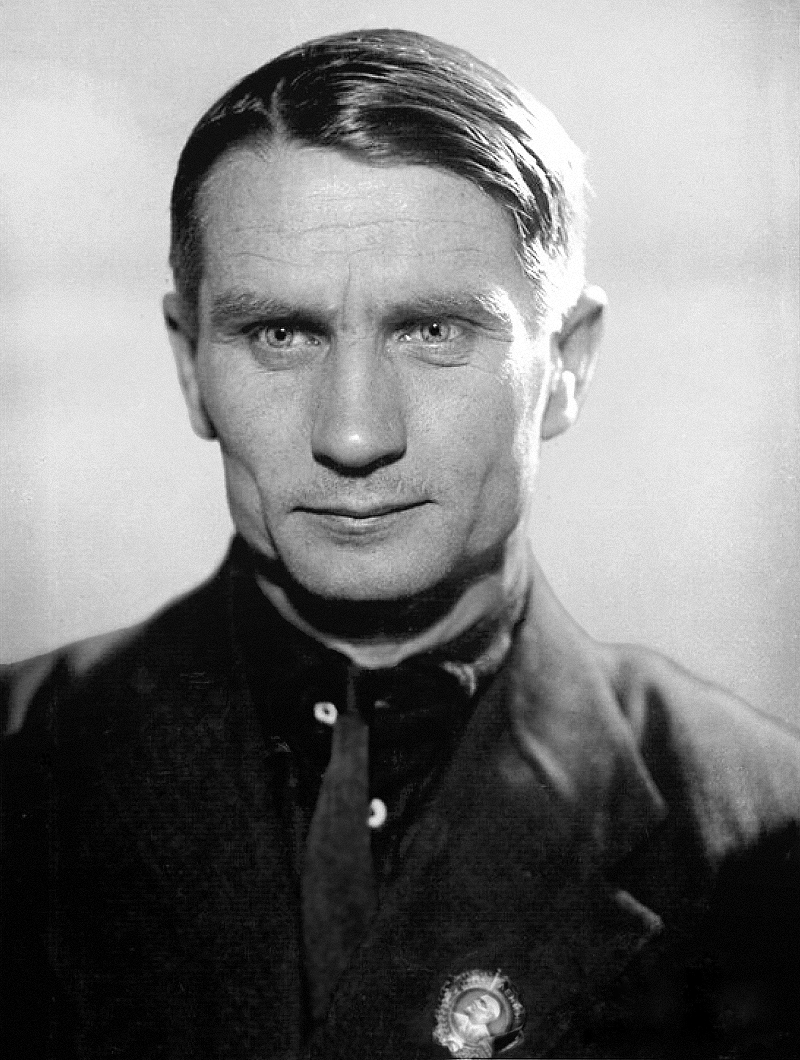
Trofim Denisovich Lysenko
(1898-1976)